


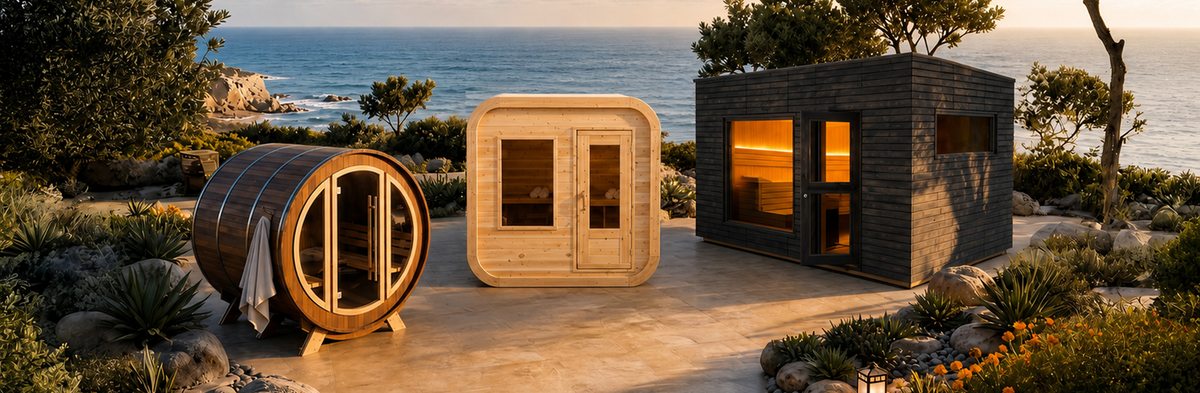
Sauna designs explained: barrel vs. cabin vs. cube
There are three main sauna designs: cube, cabin and barrel saunas. Each design looks different and offers users unique experiences.
Understanding the differences among these three designs can help you determine which sauna is best for your space and needs.
After you have learned the differences among all three sauna designs, you will be ready to shop for the sauna that is best for you.
Understanding the Main Sauna shapes and why design matters
Choosing your sauna’s shape is not just an aesthetic decision but a performance one as well.
While you do want to get a sauna that complements your home’s aesthetic and that you would be happy to look at every day, the sauna’s shape can affect how it is used. Some saunas will heat up and regulate the temperature better. If you are taller, you will want to consider sauna designs carefully as some offer less headroom than others.
Barrel saunas: classic efficiency and quick heating
Barrel saunas are typically an outdoor sauna shaped, as the name suggests, like a wooden barrel on its side. The barrel shape helps these saunas heat fast and distribute heat quickly, with the wood used to build them typically known for being rot-resistant.
Pros and cons of a barrel shape
Here are some pros and cons of a barrel-shaped sauna.
Pros
- Tends to heat up quicker
- Typically more energy efficient
- Easier assembly
- Can fit in a smaller space
- Lower cost on average
Cons
- Limited insulation
- Shorter than other models
- Less interior space
- Steel bands may need to be tightened annually
Cabin saunas: traditional comfort and multi-tier seating
Cabin saunas are designed to resemble a traditional Finnish log cabin. These saunas typically offer more room than a barrel sauna, with multi-level benches so users can choose their preferred seat and stretch out.
Pros and cons of a cabin shape
Here are some pros and cons of a cabin-shaped sauna.
Pros
- Insulation holds the temperature better
- Larger interior space
- Even heat distribution
- Weather resistant and durable
- Multi-level benches
Cons
- Takes longer to heat up
- Typically slightly more expensive compared to barrel saunas
- Requires a greater space to fit in
- May require a building permit

Cube saunas: modern aesthetics with maximized headroom
Cube saunas offer a sleek, modern and minimalistic look with glass walls in a boxy design. These saunas are built for year-round use and to evenly distribute heat.
Pros and cons of a cube shape
Here are some pros and cons of a cube-shaped sauna.
Pros
- Customizable bench layout
- Larger interior than a barrel sauna
- More comfortable for taller users
Cons
- Typically a longer heat-up time
- May need roof drainage for outdoor saunas
- Flat roof and straight edges could be more prone to water damage
Barrel vs. cabin vs. cube shaped saunas
These are some of the ways that barrel, cabin and cube sauna shapes can vary.
| Feature / metric | Barrel sauna | Cabin sauna | Cube sauna |
|---|---|---|---|
| Shape & aesthetics | Cylindrical, rustic, classic look | Square or rectangular / traditional cabin style | Boxy / modern, contemporary aesthetic |
| Heat distribution | Fastest & most even. Curved walls naturally circulate heat downward. | Layered. Heat rises to the top; lower levels stay cooler. | Slower. Larger air volume takes longer to heat evenly. |
| Seating & comfort | Single-tier curved benches; users face one another. | Multi-tier benches; allows heat control by changing bench height. | Full-height walls allow multi-tier or deeper, full-length bench options. |
| Headroom & usable space | Restricted at top curve; lower interior volume. | High vertical clearance; spacious feel with minimal wasted headroom. | Maximum headroom. Full vertical walls extend to all corners. |
| Energy & heating efficiency | Highest. ~23% less air volume to heat compared to a square space. | Moderate. Standard ceiling height requires average energy input. | Lower. Larger upper corner volume requires more heating energy/time. |
| Weather & shedding | Naturally sheds rain, snow and debris due to round shape. | Sloped or pitched roof handles heavy snow loads well. | Requires a sloped roof kit or integrated drainage to prevent water pooling. |
| Assembly complexity | Moderate. Stave alignment requires attention to tensioning. | Low to moderate. Often uses pre-built panel or log-latch systems. | Moderate. Requires robust frame support for flat/sloped roof panels. |
| Best for… | Quick warmup times, budget efficiency and classic outdoor look. | Authentic multi-tier sauna experience and larger groups. | Modern home designs, maximum headroom, and maximum seating flexibility. |
For more on how various sauna models can change your experience, talk to an expert.
How to choose the right sauna design for your space
If you are trying to choose the right sauna design for your space, look at the area you have available, the style you prefer and what you need in a sauna.
The area you have available, either indoor or outdoor, will play a big factor in the sauna you choose. Make sure you measure your available area and look at the sizes of different sauna designs. When you know the sauna models that fit in your area, you will have to decide which style best suits you, the sauna benefits that you’d prefer and your home’s aesthetic.
Ready to start looking at sauna designs? Shop for saunas today.
Rate Outdoors, LLC is a wholly owned subsidiary of Rate Holding Corp. Rate Holding Corp. will receive a financial benefit when you purchase a product through Rate Outdoors.


